

Learn Genuine vs. Natural Crystal Identification in 5 Mins (And Never Buy Fakes Again!)
Crystal products are beloved by collectors for their unique legends and benefits. Because of this love, prices have soared, leading to a flood of fakes and imitations, like common glass fakes. Learning how to spot a fake crystal is lesson number one for any beginner.
I. Scientific Methods for Real Crystal Identification
1. The Crystal Hardness Test (Mohs Hardness 7)
A natural crystal (like Quartz) has a hardness of 7, which is much harder than a copper key or a piece of glass. If you gently try to scratch it with these softer items, a real crystal will be unharmed. A fake crystal (like glass) will scratch. (Warning: We don't recommend this unless you're very suspicious, as it can cause fine scratches!). This also reveals its luster, which fakes can't replicate.
2. The Crystal Heat Conductivity Test (The "Cool" Test)
Real crystals are excellent heat conductors. When pressed against your skin, they feel distinctly cool and stay cool for a moment. Synthetic crystals or glass fakes are poor conductors and will warm up to your body temperature almost immediately.
3. Density and Weight Check
A genuine crystal has a stable density and should feel solid and "heavy" for its size. Fake crystals, especially plastic imitations, will feel noticeably light.
4. The Polariscope Test (Checks for Double Refraction)
This is a professional jeweler's tool. When you rotate a natural crystal (like Quartz) 360 degrees under a polariscope, it will "blink" (go light to dark four times). This is due to double refraction. Fakes (like glass) do not have this property and won't blink.
5. The Piezoelectric Effect
Crystals have a piezoelectric effect, meaning they generate a tiny electrical charge when pressure is applied. This happens because the pressure shifts the crystal's charge centers, creating a voltage. This micro-current is often close to the body's own bio-electricity, which some believe has a positive effect on health. The strength of this effect can differ based on how the crystal is cut, which may explain why people's physical sensations (or 'vibe') with a crystal can vary.
II. How to Spot Fake Crystals By Appearance Alone
1. Look for Imperfections: Natural Crystal Inclusions
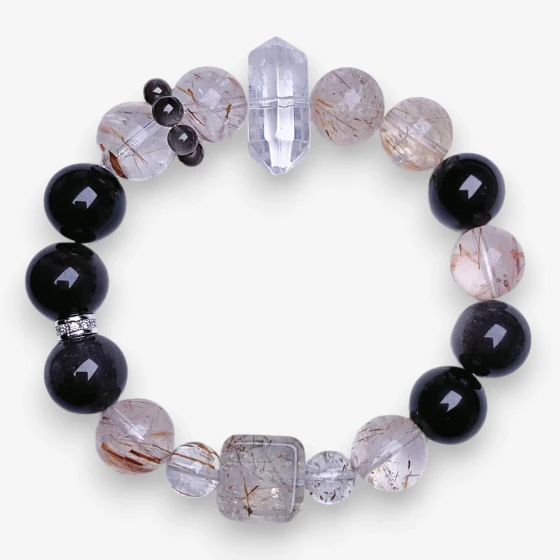
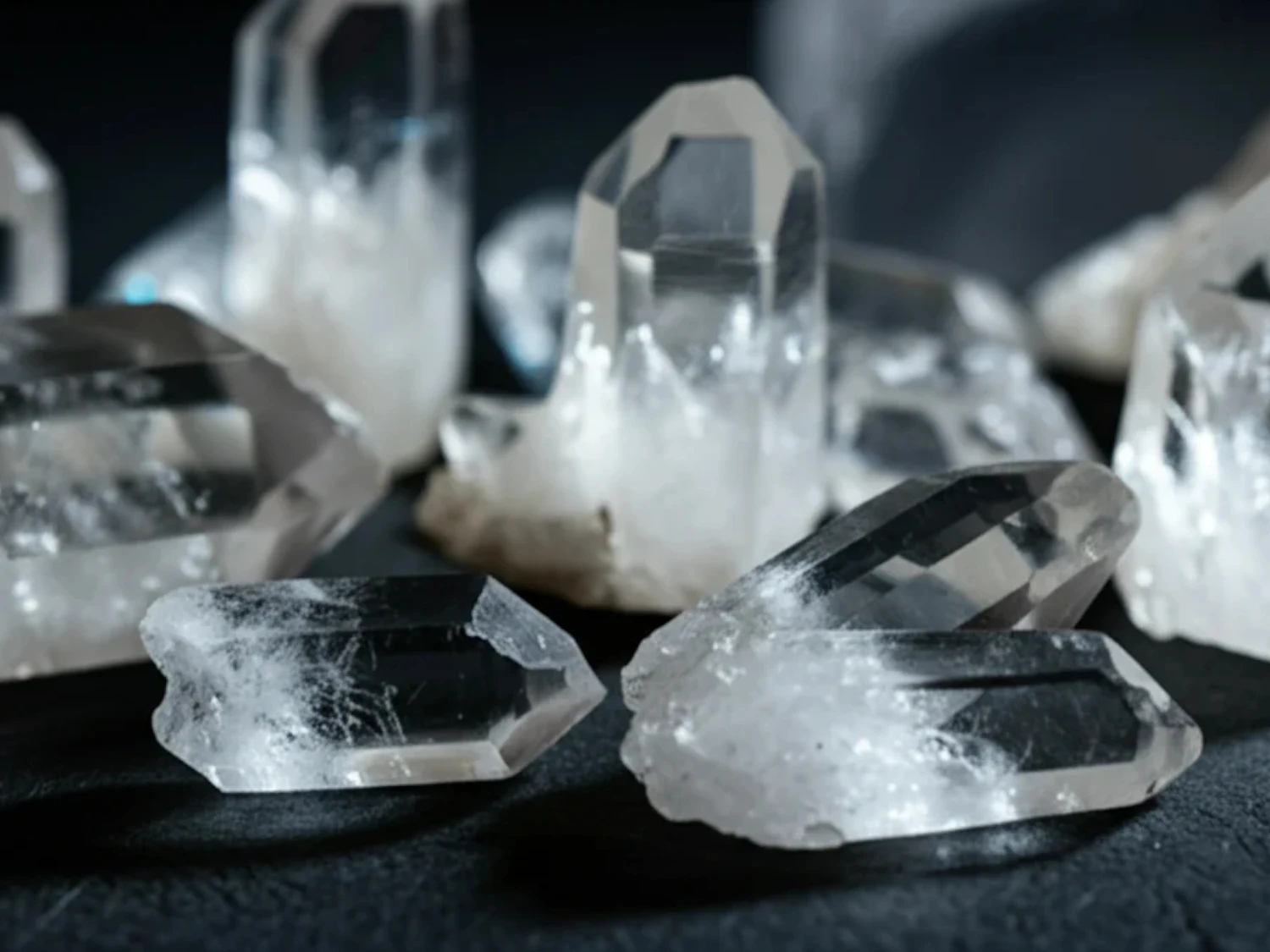
Nature is not perfect. A natural crystal is formed in the earth and will almost always have natural inclusions—things like "cotton" (fluffy bits), "ice cracks," or other tiny impurities. A crystal that is 100% flawless and clear like glass is either extremely rare and expensive, or it's a fake.
2. Unnatural Colors and Glass Fakes
Dyed crystals often look too bright or unnatural. "Crackle" quartz beads often look like popcorn. Real crystals might have inclusions like flowers or needles (e.g., Tourmaline). Glass fakes, on the other hand, are infamous for containing tiny, perfectly round air bubbles, which you don't find in natural crystal.
3. The Double Refraction Test (At-Home Method)
Place a clear crystal (must be >5cm thick) over a single hair. If it's a real crystal with double refraction, you'll see the hair split into two images as you rotate it. Fakes won't do this. In short: real crystals have inclusions (cotton, cracks); fakes have bubbles.
III. The Price Check: A Key Clue for Real vs. Fake Crystals
A finished crystal bracelet has many costs: cutting, polishing, labor, taxes, shipping, and retail markup. If you see a "natural" crystal bracelet online the price is too low, it's almost impossible for it to be a genuine natural crystal. A reasonable price is a direct way to judge authenticity (though fakes can be overpriced too!). CrystalPT guarantees the sale of natural crystal bracelets (click here to see) Feel free to browse.
IV. The Metaphysical "Vibe Check" (Trust Your Intuition)
Note: This is based on personal feeling, not science. When you encounter a crystal, if you feel a sense of discomfort or just don't like it, it's best to walk away. Trust your intuition, which often tells you if you "click" with an item, regardless of whether it's real or fake. Many believe real crystals have natural energy and provide a sense of ease. If you feel noticeably uncomfortable wearing a piece, some say it could be fake. This is a personal "sixth sense" feeling.
V. A Note on Color: "Genuine" vs. "Natural" (The Citrine Example)
Citrine, known as the stone of wealth, has become a popular type of crystal.Some crystals are genuine (meaning a real stone), but their color is not natural. They have been heat-treated to improve their appearance. This doesn't make them "fake," but it's a treatment. Citrine is the classic example. The vast majority of "Citrine" on the market is actually heat-treated Amethyst. This results in a deep, pure, strong yellow. True natural citrine is much rarer and its color is often a paler, smoky-yellow. It's a personal choice: some people love the rich color of treated amethyst. Others only want truly natural citrine. (CrystalPT sells natural citrine bracelets that are not heat-treated. You can click here to see natural, untreated Citrine.)
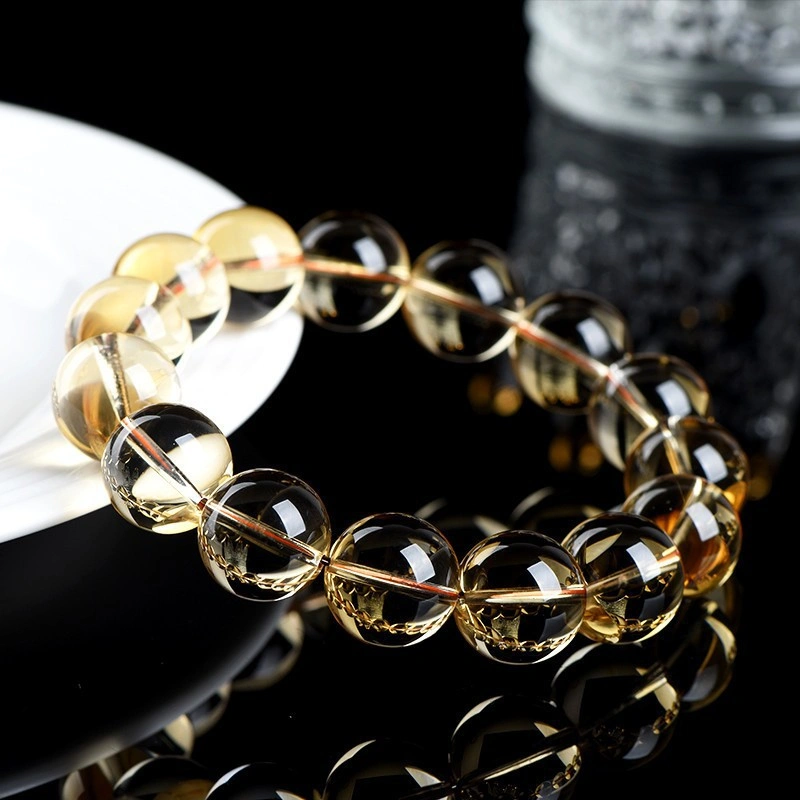
(Click on the picture to buy the same item)
VI. A Note on Grades: The Importance of Crystal Grades
It is believed that different grades of crystal offer different energy levels. A high-purity crystal is considered to be of a higher quality than one with many inclusions. Many people don't know how to distinguish crystal grades. CrystalPT has written a detailed article on this topic. If interested, you can read it here: Crystal Grades Big Reveal! Which Grade is Your Crystal?
VII. Final Verdict: When to Get a Professional Crystal Identification
If your crystal collection is highly valuable, you must get a professional lab identification. This costs time and money, but it's the only way to be 100% sure. However, the tips in this article are perfectly enough to help you spot low-quality fakes. Learning this is a necessary skill to buy the genuine crystals you love. Happy hunting!